At Century Direct Solutions, we have been helping businesses reach their audiences through the mail since 1932. Over that time, we have learned that one detail can make or break a campaign: timing. Getting your mail into homes at the right moment is what the industry calls hitting the in-home window.
An in-home window is the specific stretch of time, usually three to five days, when your mail needs to arrive for your offer to matter. It is not "sometime next month." Mail too early, and it gets forgotten. Mail too late, and your offer is irrelevant.
Some mailings are forgiving. A postcard with tips for improving curb appeal can land almost any time, because homeowners care about their yards year round. The same is true for a mailer encouraging families to start planning for college.
Other campaigns live or die by timing. A year end fundraising appeal needs to arrive by early December, when donors are making their final gifts of the year. Miss that window by a week, and many major donors will have already given elsewhere. A limited time sale is even less forgiving. If the deadline passes before the mailer arrives, you might as well not have sent it.
When timing matters, stop planning forward and start planning backward.
For an April 1 in-home date, that means approving final files by early March and starting design in February. That schedule gives everyone room to breathe.
Fewer handoffs mean fewer delays. Century Direct handles data management, printing, finishing, addressing, and mailing under one roof. In house postal acceptance moves your mail into the postal stream as soon as it is ready. Intelligent Mail Barcode tracking lets you follow it through the system, so you can time your emails, digital ads, and sales outreach to its arrival.
The difference between a campaign that delivers and one that disappoints often comes down to the in-home window. Before you design a single pixel or approve a single word, work backward to build a schedule that gives you, and us, the time to get it right. When you have an in-home date in mind, contact Century Direct Solutions, and we will help you map out a schedule that gets your mail home on time.
What happens if direct mail arrives too early?
Mail that arrives well before an offer becomes relevant is often set aside and forgotten. The goal is to have it arrive shortly before your recipients need to act.
Can I track when my direct mail is delivered?
Yes. Century Direct uses the Intelligent Mail Barcode to track mail as it moves through the postal system and provides an electronic tracking report, so you can coordinate the rest of your marketing with your mail's arrival.
 Five Reasons Print Belongs in Your Customer Acquisition Strategy
Digital marketing dominates the conversation around customer acquisition, and it earns some of that attention. Campaigns launch quickly, results come back fast, and every click leaves a trail you can measure. But speed and measurability are not the same thing as effectiveness. For companies serious about growing a customer base that lasts, print deserves a harder look than it usually gets.
Here are five reasons print should hold a permanent place in your acquisition mix.
Plenty of valuable prospects are difficult or impossible to find through digital channels. Older buyers, affluent households, and consumers who deliberately limit their screen time all fall outside the reach of most digital campaigns. Direct mail asks for far less. No email address to capture, no social platform account to target, no algorithm deciding whether your message gets seen. An address is enough.
Responding to a mail piece takes intent. Someone has to pick it up, read it, hold onto it, and then decide to act. That is a different level of commitment than a thumb slipping across a display ad, and the difference tends to follow the customer well past the first purchase. Buyers acquired through mail generally show stronger engagement, spend more per order, and stay longer. When those numbers hold, the cost of acquiring them becomes much easier to defend.
Direct mail is often filed away as an awareness tactic, useful only at the top of the funnel. In practice it performs at every stage of the customer journey, from the first introduction to your brand through to winning back buyers who have gone quiet. That range turns mail into a flexible tool rather than a single purpose one, and it slots cleanly into omnichannel programs alongside email, paid media, and everything else already running.
According to Comperemedia, targeted direct mail can generate response rates up to 15 times higher than untargeted mail. Segmenting by geography, purchase history, demographics, or audience behavior changes what mail is capable of doing. It stops being a broadcast medium and becomes something closer to surgical. Layer variable data printing on top, and each piece can speak directly to the person holding it.
More than eight in ten Gen Z and millennial consumers (85%) engaged with direct mail in 2025, outpacing both Boomers and Gen X. For brands trying to win younger customers, print remains badly underused relative to how well it performs. Part of the reason is simple math. So few competitors are sending mail to that audience that the brands who do show up have very little standing between them and attention.
Customer acquisition is getting more expensive and more crowded in every channel available. Choosing print is not a retreat from modern marketing. It is a strategic advantage sitting in plain sight, waiting for the brands willing to use it.
Ready to see what print could add to your acquisition strategy? Contact Century Direct Solutions to get started.
 For years, marketing's biggest question was which channel to use. Email or social? Print or digital? Paid search or organic? A growing number of businesses are now asking a different question first: who are we talking to, and do they trust us? Century Direct Solutions helps clients answer that question before picking a single channel, because the answer changes everything that follows.
A people-first strategy means putting the audience and their trust ahead of any specific channel. Instead of starting with "should we use email or direct mail," people-first marketers start with "who is this person, and what will actually earn their attention." That shift is reshaping how companies think about content, channels, and customer relationships.
Consumers are overwhelmed by marketing messages and are tuning most of them out. Businesses that recognize this are moving away from volume and toward genuine connection, which changes how print and digital are expected to work together.
Genuine connection usually starts with physical mail. A tangible direct mail piece carries an implicit trust signal that digital channels struggle to replicate.
Studies consistently show that consumers are more concerned about seeing their personal information in a digital ad than in a direct mail piece, and they're more likely to view a mailed piece as personal and genuine. If the goal is a people-first connection, direct mail is a critical part of the equation.
Nothing destroys connection faster than a message that feels irrelevant to the person receiving it. AI tools are accelerating the shift toward personalization, helping marketers match messaging to audience segments, behavioral data, and preferences in ways that weren't practical just a few years ago. According to Lob's 2025 State of Direct Mail report, 88% of marketers say personalized direct mail improves response rates.
When it comes to personalization, the channel matters less than the relevance of what reaches the customer.
People-first marketing doesn't work by choosing one channel over another. It works when channels are combined in ways that serve the recipient best. Print builds trust and drives attention. Digital extends reach and makes responding easy. Email keeps the relationship going over time.
The brands seeing the strongest results aren't picking sides. They understand the full customer journey and sequence the right channels at the right moments, giving their audience what they need at each stage.
Figuring out the right channel mix isn't something you have to work out alone. Century Direct Solutions is here to help you build a strategy that puts your audience first and uses print and digital together, the way they're meant to work. Need help? Ask. That's exactly why we're here.
 The USPS has released its 2027 Promotions Calendar, and there's a lot to plan around this year. Whatever your objective, there's likely a promotion here that fits your strategy. Below is a breakdown of each 2027 promotion, along with the key dates you'll need to register and participate.
This promotion rewards mailers who incorporate multi-sensory elements into their mailpieces, such as special visual effects, sound, scent, texture, or tactile treatments. It's a great option for brands looking to boost engagement through a more memorable, hands-on mail experience.
Building on prior years, this promotion encourages mailers to pair direct mail with digital technology like NFC, Video in Print, Augmented or Virtual Reality, voice assistant integration, mobile shopping, or AI. Participants can choose their own six-month participation window within the year.
Designed to encourage greater use of First-Class Mail for advertising, this promotion offers a straightforward discount for businesses using First-Class letters, cards, and flats to reach their audience.
This promotion is aimed at bringing new mailers into the channel. Companies that haven't mailed in the past two years can receive a substantial discount on their first mailings, making it an ideal opportunity to test direct mail with a lower barrier to entry.
This promotion rewards mailpieces that include messaging encouraging mail creation, promoting USPS services, or highlighting the value of mail itself. It's a good fit for campaigns that want to reinforce the effectiveness of the mail channel directly within their creative.
In addition to the core promotions, USPS is continuing two add-ons for 2027. To participate in an add-on, you must also be enrolled in one of the core promotions above.
Informed Delivery Add-On: Enhances your campaign with a digital preview element through USPS's Informed Delivery feature.
Sustainability Add-On: Rewards mailers who use paper from a certifiable, responsible source.
With registration windows opening as early as October 2026, now is the time to start mapping out which promotions align with your 2027 campaigns. Let's start planning your 2027 campaigns together to make sure you are taking advantage of these promotions.
Learn more and see full eligibility details at USPS Promotions & Incentives.
 Financial printing is not a category where mistakes are forgivable. A misprinted proxy statement, a late earnings release, or a compliance gap in an IPO document can create real consequences for a public company, an investment firm, or a law firm managing a filing deadline. That is why the right financial printing partner matters as much as the documents themselves. Century Direct Solutions has built its reputation on being that partner, carrying forward more than 130 years of combined experience through the Fitch Group legacy and applying it to every project that comes through the door.
Public companies, investment firms, law firms, and financial institutions all operate under the same pressure: materials have to be accurate, compliant, and ready on schedule, with no room for error. Whether the project is an IPO, a shareholder communication, or a quarterly results release, Century Direct Solutions manages the full workflow from document creation through printing, finishing, and direct distribution. That end-to-end approach removes the handoffs and delays that come from working with multiple vendors on a single deadline.
Century Direct Solutions supports the full range of documents that help a financial organization remain compliant and connected with its stakeholders.
Annual reports and prospectuses are handled from layout through delivery, with attention to brand consistency, eco-friendly print options, and digital access tools for stakeholders who prefer them.
Earnings releases and investor communications move on same-day or next-day turnarounds, coordinated directly with investor relations and legal teams so public disclosure deadlines are met without added risk.
IPO and M&A documentation is produced and distributed with full regulatory compliance, including support for last-minute edits and secure review workflows when filing windows are tight.
Proxy statements and notices of meeting are managed end-to-end, including design, typesetting, printing, mailing, and vote tabulation, with hybrid mail and e-delivery options available for shareholder preference.
Customized financial presentations for board meetings and investor days are formatted, printed, and packaged with premium binding and custom tab options.
Compliance and document archiving services keep printed communications secure and traceable, supporting audit trails long after materials are delivered.
Financial printing demands a partner who understands what is at stake, and Century Direct Solutions is built around that understanding. Production and support are available around the clock for critical deadlines, and every job runs through G7-certified color printing and strict quality assurance. Clients have access to print-on-demand and secure digital distribution, backed by integrated mailing, fulfillment, and tracking. The same production capability that handles a single high-stakes filing can scale to support recurring projects year after year, all backed by responsive, U.S.-based account management that keeps clients informed in real time.
Financial documents carry weight that ordinary print projects do not, and the partner producing them should be held to that same standard. Century Direct Solutions has spent over a century building the experience, systems, and discretion that financial printing requires. If your organization is preparing an IPO, a proxy statement, or any time-sensitive financial communication, contact Century Direct Solutions to discuss your project or request a quote.
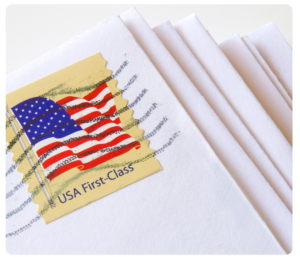 As of July 12, new postal rates go into effect, and this one is worth paying attention to. The mailing services price adjustment (Docket R2026-1) takes effect July 12, with an average increase of 4.8% across First-Class Mail, USPS Marketing Mail, Periodicals, Package Services, and selected Special Services. For anyone who mails on a regular basis, this is the kind of update that lands on your budget whether you are ready for it or not.
If you run marketing programs, fundraising appeals, or customer communications through the mail, now is a good time to look at your numbers before the new rates take hold.
Even with rising postage costs, direct mail continues to outperform most digital channels when it comes to response rates. A landmark study conducted by the Association of National Advertisers (ANA) found that direct mail delivers a median ROI of 29%, outperforming email, paid search and online display marketing efforts. Physical mail gets opened, held, and remembered in a way that an email or a banner ad rarely does. There is real science behind this. Researchers who study consumer behavior have found that printed materials trigger stronger memory encoding than digital screens, largely because touch and physical presence engage more of the brain. That translates into higher recall, more trust, and ultimately better response.
Nonprofits see this clearly in their fundraising results. Direct mail remains one of the most reliable channels for donor acquisition and renewal, often outperforming email and social campaigns on both response rate and average gift size. For a fundraising team, a well timed letter still does something a digital ask struggles to replicate.
A rate increase does not have to mean a smaller campaign or a smaller list. It means the planning stage matters more than ever. This is where working with your printer and mail partner early pays off.
We see the full picture of a mailing before it goes out the door. Paper selection, format, presort strategy, mail class, and list hygiene all affect your final cost, and small adjustments in any of these areas can add up to real savings. We have handled thousands of mailings through rate changes like this one, and we know where the flexibility exists and where it does not.
The businesses and organizations that come out ahead after a postage increase are usually the ones who brought their mail partner into the conversation before the campaign was finalized, not after. If you want to get the most value out of your mail spend this year, let us take a look at your program together.
Source: USPS Postal Explorer, July 2026 Price Change
 The evidence is clear and the results are consistent: direct mail delivers value that digital channels are structurally incapable of matching. For businesses looking to reach customers in a way that actually sticks, the mailbox continues to outperform the inbox in ways that matter most.
Digital advertising operates in one of the most contested environments ever created. Every platform is engineered to hold attention, which means every ad is fighting not just competing brands but the platform itself. Social feeds are designed to scroll. Inboxes are designed to be cleared. Banner ads are so common that most people have trained themselves to stop seeing them entirely.
Direct mail arrives in a different context altogether. There is no algorithm filtering it, no notification pulling the reader away, and no competing content surrounding it. A person stands at their mailbox, picks up the piece, and makes a decision about it in a focused moment with no digital interference. That moment of undivided attention is something no email campaign, social post, or display ad can reliably create.
There is a measurable difference in how the brain processes physical versus digital content. When someone handles a printed piece, the brain receives sensory input through touch, registering weight, texture, and finish alongside the visual information on the page. That combination of sensory channels creates stronger memory encoding than reading the same content on a screen.
Research supports what marketers who rely on direct mail have long observed. Response rates for direct mail consistently outperform email across most categories. Consumers are more likely to remember a brand they encountered through print than one they saw in a digital ad. And critically, direct mail reaches its audience in full. There are no spam filters, no ad blockers, and no algorithmic suppression to reduce delivery rates.
There is something else working in direct mail's favor that rarely gets enough attention: trust. Consumers have grown increasingly skeptical of digital advertising. Concerns about data privacy, the prevalence of sponsored content, and years of exposure to misleading online ads have eroded confidence in what people see on screens.
A physical piece of mail carries a different kind of credibility. It required a real investment to produce and send. It has a return address. It exists in the physical world rather than inside a platform that profits from engagement at any cost. For many recipients, that tangibility translates directly into a higher level of trust toward the brand sending it.
One of the strongest arguments for direct mail is its flexibility across different stages of the customer journey. A well-targeted prospect list combined with a compelling offer can drive new customer acquisition. A personalized piece sent to lapsed customers can reactivate a relationship that digital retargeting failed to recover. A catalog or product mailer sent to active customers drives repeat purchase behavior that email alone consistently underperforms on.
Each of these applications benefits from the focused attention, sensory engagement, and built-in credibility that physical mail delivers and that digital simply does not.
The question is not whether direct mail still works. The evidence answers that clearly. The better question is whether your current marketing strategy is taking full advantage of what it offers.
Century Direct Solutions combines top quality print production with the targeting, personalization, and fulfillment capabilities that make direct mail perform at its highest level. If your campaigns could be working harder, this is where that conversation starts.
 How AI Is Making Direct Mail More Valuable
The marketing landscape has changed significantly in a short period of time. At Century Direct Solutions, we have been helping businesses communicate with their audiences since 1932, and in nearly 100 years we have seen the industry shift many times. But what is happening right now with the rise of AI-generated content is something worth paying close attention to, because it is creating a real and measurable opportunity for direct mail.
The brands that recognize this shift early are the ones that will stand out.
HubSpot's 2026 State of Marketing report surveyed 1,500 marketers about their priorities, goals, and challenges in the current environment. The findings are telling. Sixty-one percent say that in a marketing landscape flooded with low-quality, high-volume AI-generated content, brand personality and authentic point of view matter more than ever. Nearly two-thirds say they need more unique, human-centered content to break through.
That is not a trend. That is a signal.
When every competitor can generate an email campaign, a social post, or a digital ad in seconds, the content that actually earns attention is the content that feels considered, crafted, and real. A well-executed direct mail piece does exactly that. It arrives in someone's hands. It does not compete with a notification. It does not disappear when an algorithm changes. It is physical, purposeful, and impossible to ignore the way a banner ad can be.
The same HubSpot report offers a clear picture of what effective marketers are doing right now, and several of those strategies align directly with what Century Direct Solutions has been building campaigns around for decades.
Seventy-five percent of marketers report using five or more distinct channels. Direct mail works best when it functions as the anchor of a broader marketing mix, reinforcing messages delivered through email, digital advertising, and other touchpoints. The right channel combination looks different for every audience, and that is precisely why a partner with deep data and targeting expertise matters.
Eighty-five percent revisit their brand identity at least once a year. Audience needs shift. Design approaches evolve. Messaging that resonated two years ago may feel dated today. For direct mail, this means campaigns need to stay current, and short-run digital printing makes that possible without the cost and waste of overprinting large quantities that quickly become outdated.
Ninety-three percent of marketers report that personalization improves lead generation or conversion rates. This is where direct mail has always had a structural advantage, and where the gap between a generic piece and a high-performing one is most visible. Personalization does not have to be complicated. A single well-chosen data point, a name, a geographic reference, a product relevant to past behavior, can meaningfully change how a recipient responds.
Century Direct Solutions has spent close to a century refining what it takes to execute a direct mail campaign that performs. From targeted mailing lists and digital printing to data management, postal optimization, and intelligent mail tracking, every part of our operation is built to support campaigns that reach the right people at the right time with the right message.
We are SOC 2 certified and HIPAA compliant, which matters deeply to the healthcare organizations, financial institutions, and other regulated industries we serve. We work across virtually every sector, from nonprofits and universities to automotive, insurance, retail, and beyond. And because we handle everything from initial strategy through production and distribution, our clients have a single point of accountability for the entire campaign.
In a marketing environment where AI is making it easier than ever to produce content at scale, the businesses that will earn lasting trust are the ones investing in quality, personalization, and channels that deliver a tangible experience. Direct mail has always done that. Now, with so much of the digital space crowded with content that lacks a human voice, it does it better than ever.
If your organization is ready to build a direct mail strategy grounded in nearly a century of expertise, Century Direct Solutions is ready to help. Reach out to our team in Islandia, NY.
