 Century Direct Solutions has been running direct mail for clients for decades, and the pattern in our data is the same year after year: direct mail still pulls a much higher response than email or display ads. That gap is real. It's also not automatic. The campaigns that actually perform are the ones that get a handful of basic things right, and most of those decisions are made before a single piece is printed.
It starts with the list. Sending to the wrong audience is the fastest way to burn a budget, and there's no design fix for it. Good targeting is less about clever segments and more about knowing the basics: who your buyer is, where they live, what they already own, and what they're likely to need next. The list also has to be up to date. A piece written for a homeowner doesn't do much sitting in an apartment mailbox after the homeowner moved out. Good data is one of the few investments in mail that consistently pays back.
Personalization is the next lever, and it's more than putting "Hi [first name]" at the top. The campaigns that move the needle tailor the image, copy, and offer to the target segment. A retiree on a fixed income shouldn't see the same piece as a young family in a new build. That kind of matching is mostly invisible to the recipient, but they feel it: this one was made for me, not blasted at me.
Then there's the offer. A real reason to respond, whether that's a discount, a free consultation, or a short window on something they already wanted, does more for response than almost any design choice. Pair it with a deadline so the piece doesn't end up on a stack and get forgotten. The piece's job is to get someone to act today, not eventually.
Timing and follow-up are where many campaigns leave money on the table. A single mailer dropped in isolation rarely matches the lift you get from a piece timed to land when your audience is paying attention, then backed up with a coordinated digital touch or a second drop. Real-time tracking helps with this: you can see in-home dates, watch how the response is shaping up, and adjust the next round based on what happened, not what you guessed.
These four things compound. The list decides who hears you. Personalization decides whether it lands. The offer is what gets people moving. Timing and follow-up are what catch that momentum before it cools. Skip one, and the math gets harder.
If your mail isn't performing the way it used to, or the way you need it to, that's usually where we look first. Century Direct Solutions builds the whole program around these factors, from data and audience work through print, delivery, and tracking. Send us your last campaign, and we'll tell you where the lift is hiding.
 At Century Direct Solutions, we have spent decades helping businesses connect with their customers through the power of direct mail. Over the past few years, we have watched the landscape of print personalization shift in ways that are both significant and encouraging. What was once a race for maximum data collection and mass output has evolved into something far more nuanced: a careful balance between relevance, data responsibility, and environmental stewardship. For the brands we work with every day, understanding this shift is not optional. It is the foundation of every effective campaign we build together.
Print personalization is no longer simply about adding a recipient's name to a mailer. Today's campaigns leverage sophisticated data analytics to create truly customized experiences, from variable imagery to tailored messaging that speaks directly to the individual holding the piece in their hands. An outdoor retailer, for example, might feature hiking gear for mountain enthusiasts in Colorado while showcasing beach equipment for coastal customers. Each piece is printed on demand and tailored based on factors such as purchase history, geographic data, and stated preferences. The result is a mailing that feels less like advertising and more like a conversation.
This capability, however, comes with heightened expectations. Consumers today are more aware than ever of how their data is being used, and they expect the brands reaching out to them to act responsibly. The most effective campaigns now prioritize quality over quantity, rely on better qualified audiences, and incorporate sustainable practices from start to finish. Responsible personalization has become the new gold standard, and it is not simply a matter of regulatory compliance. Brands that master this balance build genuine trust that translates directly into stronger customer loyalty and measurable response rates.
The business case for this approach is equally compelling. Digital workflows and print on demand capabilities have dramatically reduced overruns, waste, and excess inventory. Businesses can now produce exactly what they need, when they need it, without sacrificing the personal touch that makes direct mail so effective. Sustainability has also moved from a niche consideration to a mainstream customer expectation. Recycled substrates, eco friendly inks, certified papers, and carbon neutral shipping options are no longer premium add ons. They are table stakes for brands that want to be taken seriously. Lighter packaging and intelligent design choices further reduce environmental footprints while preserving the visual impact that drives response.
The strategic advantage belongs to marketers who recognize that personalization is changing for the better. The most successful campaigns will not be built on the biggest budgets or the deepest data pools. They will be built on focus, trust, and a genuine commitment to the customer relationship.
At Century Direct Solutions, we believe that effective personalization is ultimately about earning the trust your customers have placed in you and honoring it with every piece you put in their hands. We are proud to help our clients do exactly that, and we look forward to continuing to lead the way in direct mail that is smarter, cleaner, and more meaningful than ever before.
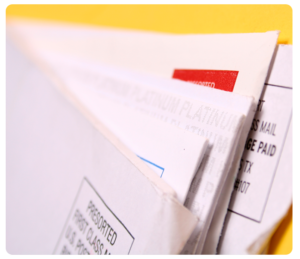 In direct mail, the envelope does its job before your message even gets a chance. It's being sorted, glanced at, and judged in seconds. Most pieces never make it past that moment. At Century Direct Solutions, we've spent years helping clients make sure theirs do. Here are five areas of the envelope that deserve your full attention.
This space doesn't have to feel like a shipping label. A handwriting-style font immediately shifts the tone from mass mailing to personal correspondence. Small additions like "John Doe, a valued customer since 2015" turn a functional line into a moment of recognition. People notice when something was meant for them specifically, and that impression carries through to whether they open it.
Most mailers default to a bulk indicia and move on. That's a missed opportunity. First-class stamps carry a psychological association with personal, important mail. Using one signal to the recipient that this piece is worth their time before they've read a word. When a campaign has a seasonal or thematic angle, a well-chosen stamp can subtly and effectively reinforce that message. It's a small detail with a real impact on perception.
The outside of the envelope is prime real estate, and teaser copy is how you use it. Address the recipient directly. "John, there's something inside worth opening" works better than a generic headline because it creates a moment of personal connection. A well-crafted sense of urgency, a genuine curiosity hook, an exclusive angle, any of these can be the difference between an envelope that gets opened and one that goes straight into the recycling bin. The copy must earn the open.
Don't treat the return address as an afterthought. It's a branding moment. Something like "From the Team at Century Direct Solutions, Your Partner in Results" paired with your logo and brand colors immediately signals professionalism and familiarity. Recipients who already know your client's brand will feel reassured. Those who don't will form their first impression right here. Make it count.
Most mailers leave the back blank. That's a significant amount of space being left on the table. A continuation of your teaser copy, a short testimonial, a social proof line like "Join thousands of customers who opened this envelope and never looked back," all of these extend the conversation before the envelope is even opened. Use the back to build momentum toward the moment of opening.
Knowing what to do with these five areas is one thing. Executing it with precision across a full campaign is another. At Century Direct Solutions, we don't just bring your project to life, we track it, measure it, and maintain a compliance process that covers every stage from start to finish. Handling your data and communications is what we do, and the way we integrate them is what sets us apart.
Every element of your envelope, from the address block to the back panel, is part of a larger story. When the design, the data, and the production process work together under one roof with full accountability at every step, you end up with mail that doesn't just look good. It performs. The envelope is your first impression. Make it one that gets opened.
Ready to build a direct mail campaign that works from the outside in? Reach out to Century Direct Solutions and let's talk about what's possible.
 If you've been looking for ways to trim your marketing budget, direct mail frequency is likely on your list of cuts. We get it. But here's what we've seen time and time again working with businesses across the country: reducing how often you reach your customers doesn't just save money, it quietly chips away at the relationships you've worked so hard to build. Print creates emotional connections that digital channels can't replicate, and every touchpoint you eliminate is a missed opportunity to stay top of mind.
The good news is that you don't have to choose between staying connected and staying on budget. At Century Direct Solutions, we help clients do both every single day. Here are six smart ways to reduce your direct mail costs without sacrificing the consistency your customers count on.
Your biggest expense isn't postage. It's mailing to people who will never respond. Regularly cleaning your list by removing duplicates, correcting outdated addresses, and segmenting by engagement level can dramatically improve your return. Mailing to 5,000 well-qualified prospects will outperform a bloated list of 10,000 disengaged contacts every time, at a fraction of the cost.
If your goal is to reach a specific geographic area rather than named individuals, Every Door Direct Mail (EDDM) is one of the most cost-effective tools available. It eliminates list acquisition costs and qualifies for reduced postage rates, making it much easier to maintain mailing frequency without blowing your budget.
Fully customized mailers with unique layouts and images for every recipient carry a higher price tag. But the good news is that you don't always need full customization to see strong results. Personalizing just the name and a relevant offer often delivers most of the lift at a significantly lower cost per piece.
Not every mailing needs to be a premium piece. A smart campaign calendar alternates between high-impact, embellished mailers sent quarterly and simpler, cost-effective postcards in between. You maintain a consistent presence without spending at the same level every single month.
Direct mail opens the door. Email and digital follow-up keep the conversation going between mailings at very little additional cost. This kind of coordinated approach extends your reach and reinforces your message without increasing your print and postage spend.
Working with a knowledgeable direct mail partner makes a real difference here. Century Direct Solutions helps clients take advantage of postal discount windows, volume thresholds, and other opportunities that meaningfully reduce per-piece costs.
Consistency is what builds customer loyalty and drives long-term revenue. The goal isn't to mail less. It's to mail smarter.
Reach out to the team at Century Direct Solutions today, and let's take a closer look at your current direct mail program together. We'll find the savings without losing the connections that matter most.
 At Century Direct Solutions, we have built our business around a simple but powerful belief: the right message, delivered to the right person at the right time, changes everything. It turns out your customers believe it, too, and the numbers prove it.
A recent Keypoint Intelligence survey on transactional communications, covering everything from bills and statements to account updates and promotional mail, asked consumers directly what would make those communications more effective. The top three answers were telling: 43% said "make them easier to understand," 34% said "make them relevant to me," and 28% said "personalize the content for me."
Read between the lines, and the message is unambiguous. Consumers are not simply asking for better design or cleaner copy. They are asking to be recognized as individuals. They want to feel that the mail in their hands was created with them in mind, not mass-produced for a faceless audience of thousands.
This is not a small shift in preference. It is a fundamental change in how people relate to the brands that communicate with them.
Here is where the data becomes especially compelling for direct mail marketers. Nearly half of all survey respondents, 49%, reported spending significantly more time reading personalized, relevant direct mail compared to generic mailings. Think about what that means in practical terms. The same piece of paper, the same postage, the same delivery window, but a dramatically different level of attention simply because the content speaks to that individual recipient.
Younger consumers showed an even stronger response. Among those aged 18 to 34, more than half, 51%, said they spend much more time with personalized mail. This is a generation that grew up surrounded by digital noise and has developed a finely tuned ability to filter out anything that does not feel relevant to them. When personalized direct mail cuts through that filter, it earns real, meaningful engagement.
Older consumers, those 55 and up, came in at 45% on the same measure, which might seem lower at first glance. But context matters here. This demographic already engages strongly with direct mail across the board. Their slightly lower differential simply reflects that they give even generic mail a fair read. Personalization lifts performance across every age group.
Engagement is not just a feel-good metric. It is the engine that drives response rates, conversions, and ultimately return on investment. When a recipient spends more time with your mail piece, they absorb your message more fully. They are more likely to visit your website, redeem your offer, make a purchase, or pick up the phone. Every additional second of attention increases the probability of action.
Data-driven, targeted direct mail compounds this effect by ensuring your investment is concentrated where it is most likely to pay off. Rather than mailing broadly and hoping for a reasonable response rate, personalized campaigns use demographic, behavioral, and transactional data to identify the recipients most likely to respond. The result is a smaller universe of highly qualified prospects, a higher response rate, and a lower cost per acquisition. That is how personalization moves the ROI needle.
One of the most common hesitations we hear from marketers is that personalization sounds expensive or complicated. The reality in today's environment is quite different. Variable data printing, intelligent list segmentation, and data-driven targeting are well within reach for businesses of every size. Century Direct Solutions has the tools, the expertise, and the production capabilities to take your campaign from a flat, one-size-fits-all mailing to a precisely targeted, individually personalized communication, without the overhead or complexity you might expect.
If your current mailings are treating every customer and prospect the same way, you are leaving measurable engagement and revenue on the table. The good news is that closing that gap is more straightforward than most marketers realize.
Century Direct Solutions exists to help you get more from every piece you put in the mail. Whether you are looking to improve the performance of a transactional mailing, launch a highly targeted acquisition campaign, or simply make your current customers feel genuinely valued, we are ready to help you get there.
Reach out to your Century Direct Solutions representative today and let's talk about how a smarter, more personalized approach to direct mail can deliver the results your business is looking for.
 If you've ever managed unclaimed property due diligence mailings, you already know the pressure that comes with them. Compliance deadlines, regulations, tracking requirements, and the very real consequences of getting it wrong. It's a lot to navigate, and it's not the kind of task where "close enough" is acceptable.
That's exactly why we built Century Direct Solutions around one core promise: making this process easier, more reliable, and fully compliant for the organizations that depend on it.
Unclaimed property outreach requirements are anything but one-size-fits-all. Timelines, formatting requirements, mailing standards, and documentation expectations can vary significantly from one jurisdiction to the next, and keeping up with those differences takes real expertise.
This creates a genuine challenge for compliance and finance teams who are already stretched thin. Managing regulatory requirements while also handling the operational side of a mailing campaign is a lot to take on. We understand that, and we've built our services to take that burden off your plate in every state we serve.
At Century Direct Solutions, we handle print, mail, and email due diligence campaigns from start to finish. But what really sets us apart is our end-to-end tracking. You'll have complete visibility into every stage of the process, from the moment your letters are printed to the moment they're delivered.
That kind of transparency matters. When regulators ask questions or audits come around, you need documentation you can stand behind. Our tracking systems are built to give you exactly that, without having to chase down information or piece together records from multiple vendors.
We don't just help you send letters. We help you send the right letters, to the right people, in the right way, every time. Our team stays current on state-mandated outreach requirements so you don't have to. When you partner with Century Direct Solutions, you're not guessing about compliance. You're working with a team that has made it their specialty.
This kind of expertise comes from years of focused work in the unclaimed property space. We know the nuances, we know the deadlines, and we know what it takes to protect your organization from costly errors or penalties.
We work with organizations that can't afford mistakes. That means we hold ourselves to a high standard on security, accuracy, and reliability. Every mailing we handle is treated as the critical communication it truly is.
Whether you're preparing for your next due diligence cycle or looking for a long-term partner to handle the logistics of your unclaimed property program, Century Direct Solutions is ready to help.
Let's make your next campaign your smoothest one yet. Reach out to our team today and see how hassle-free compliant mailing can actually be.
 Direct Mail in 2026: Design Trends and Strategies That Drive Real Results
In a world saturated with digital noise, direct mail continues to outperform the competition. While the average online display ad generates a response rate of just 0.3%, direct mail consistently pulls between 2.7% and 4.4%, more than ten times higher. For businesses and nonprofits across the Northeast and beyond, that kind of performance is impossible to ignore. At Century Direct Solutions, we've spent decades helping organizations harness the full power of direct mail, and in 2026, the opportunities have never been greater.
But strong results don't happen by accident. They come from smart strategy, precise targeting, and forward-thinking design. Here's what's driving direct mail success right now.
Yes, including a recipient's name still significantly boosts response rates, but today's personalization goes much further. One of the most compelling innovations is the personalized map. Using specialized software, mailers can now generate custom maps that plot a route from each recipient's address directly to your location, complete with street names, landmarks, and highlighted travel paths. Instead of simply telling prospects where you are, you're showing them exactly how to get there. It's practical, it's personal, and it gets noticed.
The mailbox is a tactile space, and smart designers are leaning into that reality with approaches that engage multiple senses.
Foil stamping brings a metallic sophistication to printed pieces that no digital ad can replicate. Aligned with broader design trends favoring metallic finishes in fashion and interiors, foil-stamped mail pieces feel premium and memorable. The key is pairing the technique with smooth paper stocks and clean design, a detail our team can help you nail from the very start of your project.
Die cuts take engagement a step further. When recipients can open, close, or peer through a uniquely shaped mailer, they spend more time with it and more time with your message. That tactile curiosity translates directly into higher response rates.
Interactive elements like pop-ups, sliding panels, and fold-out designs push engagement even higher. These pieces don't just get read; they get played with, passed around, and remembered. The pass-along effect alone can meaningfully extend your campaign's reach at no additional cost.
Today's most effective direct mail campaigns don't operate in isolation. By integrating your mailers with digital advertising and matching physical addresses to IP addresses without relying on third-party cookies, you can reach recipients before and after your piece lands in their mailbox. This multichannel approach sharpens targeting and reinforces your message at every touchpoint.
USPS Informed Delivery takes this a step further, at no additional cost. Enrolled recipients receive daily email previews of their incoming mail, giving your piece a digital debut before it even arrives. Add a clickable link to that preview, and you've just turned a single mailer into a multichannel campaign with built-in tracking.
Design trends and digital integrations are only as powerful as the strategy behind them. Reaching the right audience with the right message at the right time still determines whether a campaign succeeds. That means investing in accurate, current data, segmenting your audience thoughtfully, and building in real-time tracking so you can measure, adjust, and improve.
Century Direct Solutions offers Direct Mail Services to Businesses and Nonprofits in the Northeast and Across the US. From initial concept through final delivery, our team brings the expertise, technology, and creative resources to make every campaign perform. Ready to put these trends to work? Let's talk.
 Why Your Brain Prefers Direct Mail Over Email (Science Says So)
A message from Century Direct
Ever wonder why your customers remember your direct mail pieces but overlook your emails? The answer isn't about better design or catchier headlines; it's hardwired into the human brain.
At Century Direct, we don't just believe in direct mail—we trust the science behind it. Temple University's Center for Neural Decision Making partnered with the U.S. Postal Service to examine how the brain processes physical versus digital advertising. For businesses like yours, investing in customer acquisition and retention is game-changing.
Researchers tracked three critical phases of the buying journey:
While participants processed digital ads faster, that speed came with a significant tradeoff: their brains didn't retain details or recall them as easily later.
Physical mail triggered distinctly different responses. Participants spent more time engaging with print, showed stronger emotional reactions, and remembered the content more effectively.
Here's what matters most for your business: Even though participants reported similar interest levels whether ads were physical or digital, their brain activity revealed the truth. Subconscious measurements showed significantly greater "intent to buy" for products advertised through print.
For high-value purchases—whether you're selling home renovations, solar installations, financial services, or B2B solutions—lasting impressions drive conversions. Digital grabs quick attention, but physical mail creates the memorable impact that leads to action.
The study also revealed something powerful: combining print and digital creates a complementary effect that optimizes your media strategy and drives superior results.
These findings aren't isolated. Royal Mail/Millward Brown and Canada Post/Ipsos reached identical conclusions through neuroscience research: physical media generates deeper brain processing than digital channels. Direct mail consistently outperforms email and television in engagement depth, emotional intensity, and memory retention.
Even educational research confirms it. Students given the same material in print versus digital formats consistently recall information more accurately from print.
Your customers' brains genuinely respond differently to print. That neurological advantage translates directly into marketing performance and ROI.
When you partner with Century Direct, you're not just choosing a direct mail vendor—you're leveraging proven neuroscience to work with your customers' brain chemistry, not against it.
Let's discuss how Century Direct can design a data-driven direct mail campaign that creates lasting impressions and drives measurable results. Our team specializes in helping businesses like yours cut through the digital noise and connect with customers in ways that stick.
Contact Century Direct today:
www.centurydirect.net
contact@centurydirect.net
212-763-0600

As you seek to break through the marketing clutter, the more channels, the better. At Century Direct, we've seen firsthand how strategic channel pairings consistently deliver higher response rates than any single channel alone. Our clients achieve the best results when they understand the nuances between different channel strategies and select the approach that aligns with their goals. As you plan your marketing efforts, you may wonder about the terms "omnichannel marketing," "multichannel marketing," "cross-channel marketing," and "integrated marketing." What are the differences between them? Is one approach better than another? Let's take a look and find out.
Multichannel: Multichannel marketing involves using multiple marketing channels to interact with customers and prospects. Each channel operates independently in this approach, targeting specific customer segments without necessarily coordinating their efforts. For instance, a company might engage in email marketing, social media marketing, print advertising, and direct mailings, but these channels may not share information or synchronize their messaging.
Omnichannel: Omnichannel marketing takes the concept of multichannel marketing a step further by creating a seamless and integrated customer experience across all channels. The critical difference is that with omnichannel, data and insights from different channels are shared and used to personalize the customer experience. For example, a customer might start their journey with a direct mail piece, which drives the prospect to your website, where they put an item in their shopping cart. If they abandon the cart, they may receive a triggered "abandoned cart" email reminding them to log back in and finish the purchase. The customer's preferences and interactions are seamlessly integrated throughout this process, creating a smooth and cohesive experience.
Cross-channel: This means that the customer is moving from one channel to the other, with the channels typically integrated in some way. Scanning a QR code to download a coupon is cross-channel marketing. So is clicking through an email to access a product page on the marketer's website.
Integrated: Integrated marketing refers to the strategic alignment of all marketing efforts, irrespective of the channels used. It goes beyond just coordinating various marketing channels and involves aligning all aspects of marketing, including branding, messaging, communication, and customer experience. Integrated marketing ensures that every marketing touchpoint reflects the same brand values, positioning, and objectives, working cohesively to reinforce brand identity and deliver a seamless customer experience.
Choosing the right channel strategy for your business can be complex, but you don't have to navigate it alone. Century Direct has built a reputation as a trusted partner for businesses seeking to maximize their marketing impact through proven, data-driven channel strategies. With decades of experience and a track record of delivering measurable results, our team brings the expertise and guidance you need to create campaigns that truly connect with your audience. Whether you're exploring omnichannel integration or refining your multichannel approach, Century Direct is here to help you achieve your goals with confidence. Reach out to us today to discover how our strategic insights can transform your marketing efforts.
